1082026.37 · Free
The berth window that was not
A terminal in the Baltic published a tariff with a Saturday surcharge that applies on no Saturday, and a forwarder has been paying it for a year.
· 3 min · Ports
Gdynia is a good port to be wrong about, because it is efficient enough that errors look like policy. A reader who runs customs and haulage for a furniture importer sent me a tariff page last week and a question: why does the terminal charge a Saturday gate surcharge of 40 euros when it does not open on Saturdays?
I looked. The terminal’s published gate hours run Monday to Friday, 06:00 to 22:00, with Saturday listed as “by appointment”. The tariff says a Saturday surcharge applies to “all gate transactions outside Monday to Friday standard hours”. Both documents are correct. Together they describe a charge that applies to a service almost nobody can buy.
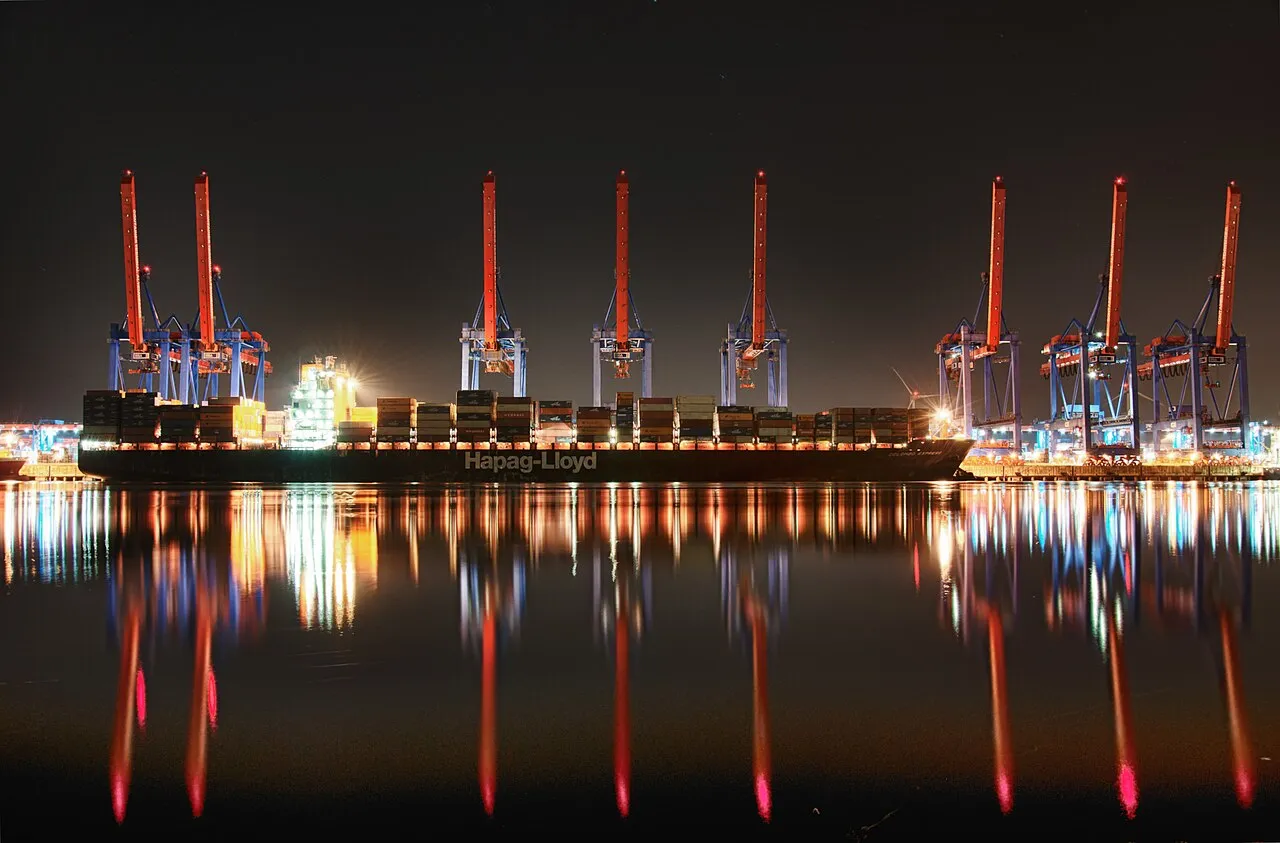
Colombo Express at the Altenwerder terminal, Hamburg, at night, July 2009. Photo: Martin Damboldt, CC0.
How it got there
I rang the terminal’s commercial office on Thursday. A pleasant person explained that the Saturday appointment system was introduced in 2019 for a single customer, a feed exporter, whose lorries needed to load before a Sunday vessel. The surcharge was written for that arrangement. The feed exporter left the terminal in 2022. The surcharge stayed, because tariffs get added to and rarely subtracted from, and because nobody wanted to be the person to ask about a 40 euro line.
The reader’s company, however, had been paying it. Not on Saturdays. On Fridays, after 22:00, when a late lorry got through the gate at 22:40. The terminal’s billing system reads any transaction outside standard hours as “Saturday rate”, because that was the only out-of-hours code in the tariff table. He found this by lining up 14 invoices against the gate logs.
The bill
Fourteen late Friday gate-ins over twelve months, at 40 euros each, is 560 euros. A rounding error against annual port costs of about 310,000 euros. He asked for a refund and got one within two days, which suggests the terminal was well aware.
What interested me is the scale of the phenomenon. I asked four other forwarders with Baltic exposure whether they had seen a similar charge in the last year. Three had. One was a “weekend yard handling” fee at a different port that applied on Wednesdays during a crane maintenance window, because the maintenance window had been coded as a weekend in the billing table. Another was a reefer monitoring charge for dry containers. The third, a surcharge of 25 euros for a “hazardous goods inspection” on a pallet of ceramic tiles, was refunded with a note that said “classification error”, which I enjoyed.
A short field guide to tariff errors
If you handle port invoices, here is what I look for, in order of how often it turns up.
- A time-based surcharge on a time when the service does not exist. Saturday, public holidays, night shifts at terminals that run two shifts.
- A charge for an item the container does not hold: reefer, hazardous, out-of-gauge, overweight.
- A storage day counted from the vessel’s arrival and not from discharge, which can add one or two days.
- A unit mismatch: per tonne charged as per container, or per TEU applied to a 40-foot box as 2 TEU twice.
- A currency conversion done at last month’s rate. This one is rarely an error and always deserves a question.
Of the five, the first is the most common and the least likely to be noticed, because it appears as a small line on a long invoice. Most of the corrections I know about were found by a person with a spreadsheet and a free evening.
Why this is not just trivia
Port tariffs are published documents, but they are administered by systems. Where the two disagree, the system wins, and the document becomes an exhibit. If you are a shipper, the practical thing is to treat any recurring charge you cannot explain as a question for the terminal, not a cost of business.
The reader in Gdynia now sends the terminal a one-line email each month listing out-of-hours transactions and asking for confirmation of the applied rate. It takes him four minutes. Over the last three months it has recovered 120 euros. At his hourly rate, he says, that is about break-even. At mine, it is a better return than most things I do on a Friday evening.
Next Tuesday: a heavier issue on vessel age, and a footnote about the oldest ship I have seen still on a main-lane rotation.
Get the next issue
Every Tuesday, by email.
On the same topics
- 96Four ports, one quiet week of dwell timesMembers issue, 20% free